
 February 18, 2026
CNC West Feature: From Legacy Widgets to 5-Axis Leadership
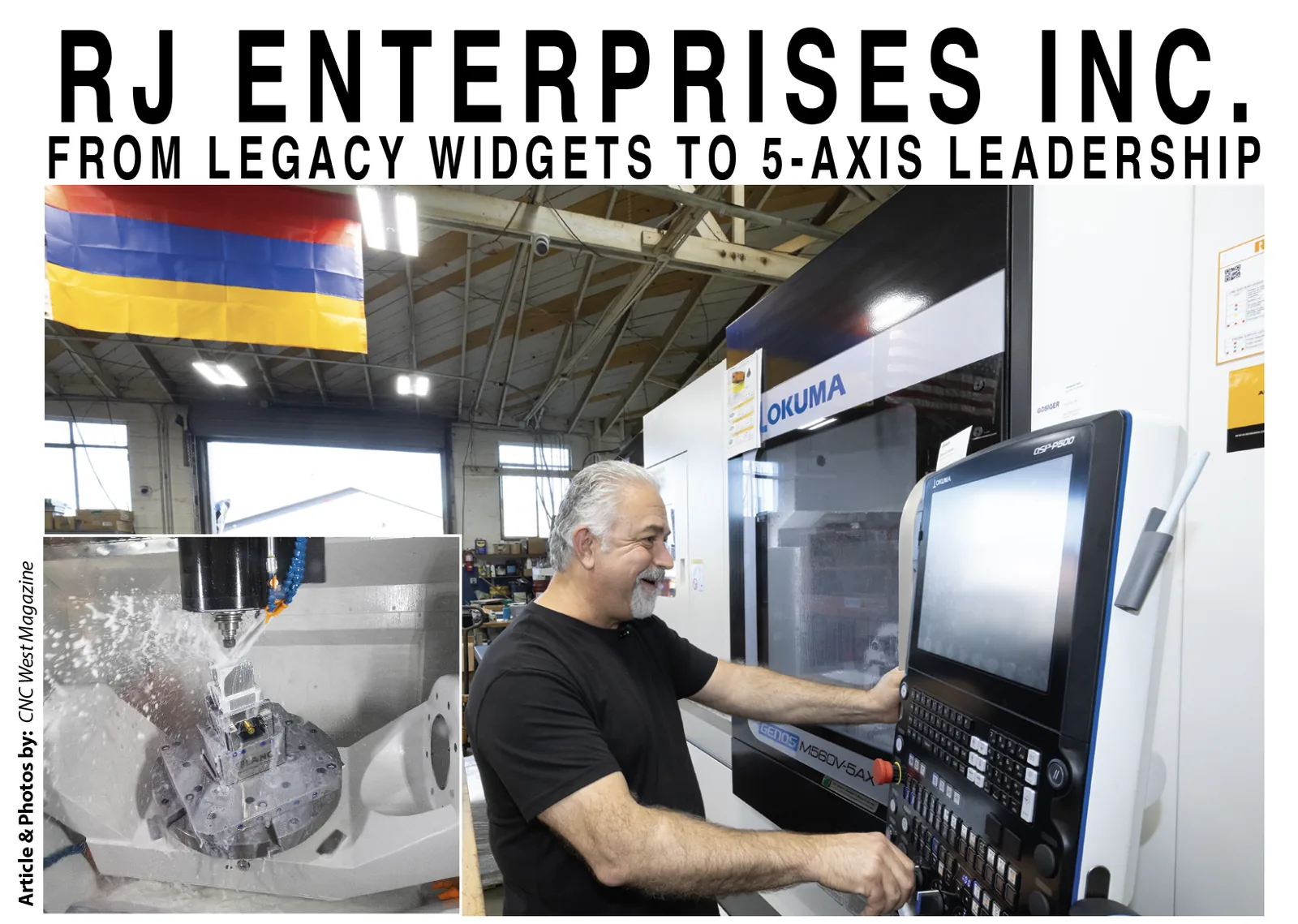
Article and photographs by CNC West Magazine
CNC West Magazine visited RJ Enterprises for a profile of the shop's move from single-customer legacy work to simultaneous 5-axis and mill-turn production, capital investment strategy and the road toward lights-out manufacturing.
CNC West Magazine published a profile of RJ Enterprises on February 18, 2026, following an on-site visit to the Gardena facility. The article traces the company from a 400 sq. ft. shop with one customer to a diversified precision machining operation built around simultaneous 5-axis milling and mill-turn production. The full feature is available at cnc-west.com.
The piece is worth reading in full, but three themes in it describe how the shop makes decisions today, and they are the same themes that govern how a new program gets quoted, tooled and inspected here.
Diversification as an engineering constraint
CEO Vartan Akrabian purchased RJ Enterprises in 2000. The shop had one customer and a catalog of legacy parts. Early growth came from high-volume powder metal finishing work — drilling, tapping and light machining on cold-pressed components — which concentrated roughly 90 percent of revenue in a single process family. The 2008 downturn removed most of it.
The response was structural rather than promotional: no single industry is now permitted to represent more than 10 to 20 percent of the business. Aerospace, defense, medical, space, industrial, commercial, food equipment and instrument work each carry part of the load. That mix has a direct engineering consequence. A shop serving one sector optimizes for one set of materials, tolerances and documentation habits. A shop serving eight has to keep general capability — inspection method development, material handling, traceability and print interpretation — strong enough that an unfamiliar drawing is a routine event rather than a risk.
Capital equipment bought against a specific job, then sold as spindle time
The article describes an acquisition discipline that is unusual to state publicly: a machine is justified by a specific job, the return is calculated on that job, and only then is the remaining spindle time marketed. Three Okuma 5-axis mills and two DMG MORI NLX mill-turns were added in a single year on that basis, including the Okuma Genos M560V-5AX that was running its first production parts during the CNC West visit — a complex aerospace item with roughly a three-hour cycle time.
The reasoning behind the platform choices is mechanical, not brand loyalty. Casting mass and the resulting damping, thermal stability across long unattended runs, and gantry-style 5-axis architecture all serve the same end: holding position while a heat-treated or superalloy workpiece resists the cut. On the turning side, the NLX sub-spindle and BMT turret with high-speed driven tooling exist so a shaft or housing leaves the machine complete, rather than moving to a second operation where a new datum is established and error is introduced.
Quantities in the article range from 20 pieces a year to 200,000. That span is why the shop maintains both trunnion 5-axis centers and 16 Swiss-type turning machines alongside conventional CNC turning and milling capacity. Matching part geometry and volume to the right platform is the first cost decision on any quote, and it is made before tooling is selected.
Automation, consolidation and what comes next
The article closes on the next five years: automation, robotics and lights-out operation, informed by a Swiss turning operation in Tennessee running 40-plus Citizen screw machines with minimal intervention — bar in, finished parts out. A 20,000 sq. ft. facility is expected to come online in 2026, consolidating the Gardena and Arleta locations.
Consolidation also means selection. Dual-pallet Brother Speedio R450X1 mills and the Takisawa TCC-2000 and TCC-1000 turning centers are described as keepers; basic 3-axis verticals are candidates for replacement by 5-axis capacity regardless of brand. The direction is consistent with what customers are asking for: fewer setups, tighter tolerances and complete parts off one machine.
What this means for a program in evaluation
- Process selection is deliberate. Geometry, length-to-diameter ratio, material condition and annual volume determine the platform. See capabilities and the equipment list for what is available in house.
- Certification is in place. RJ Enterprises is AS9100D and ISO 9001:2015 certified and ITAR registered; quality and metrology documents the inspection stack behind that.
- Documented results. Representative programs are described in the case studies.
Programs currently out for quote can be sent through the RFQ form, or discussed directly through contact.
*Source: CNC West Magazine, "RJ Enterprises Inc. – From Legacy Widgets to 5-Axis Leadership," February 18, 2026.*
Photographs from CNC West Magazine
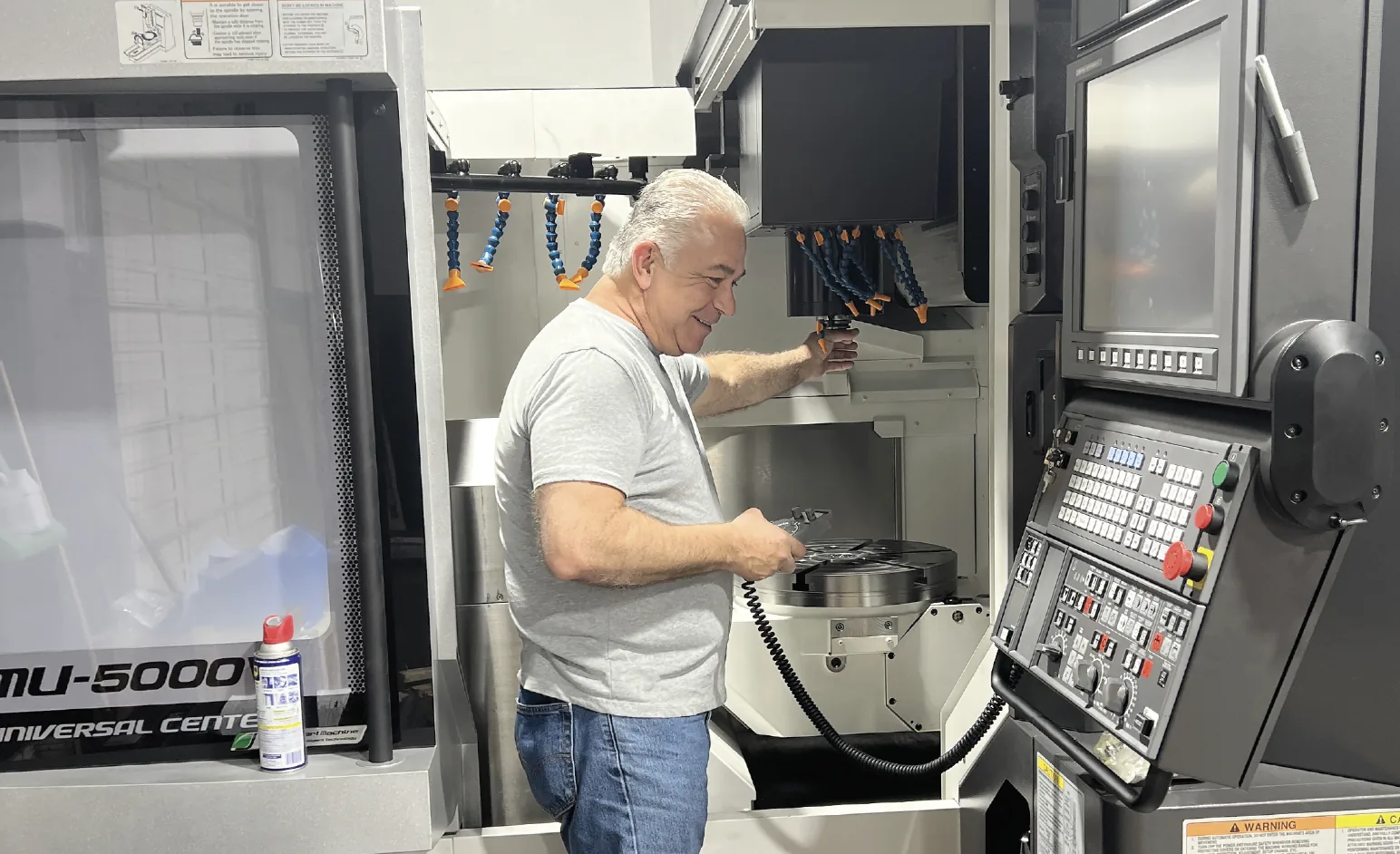
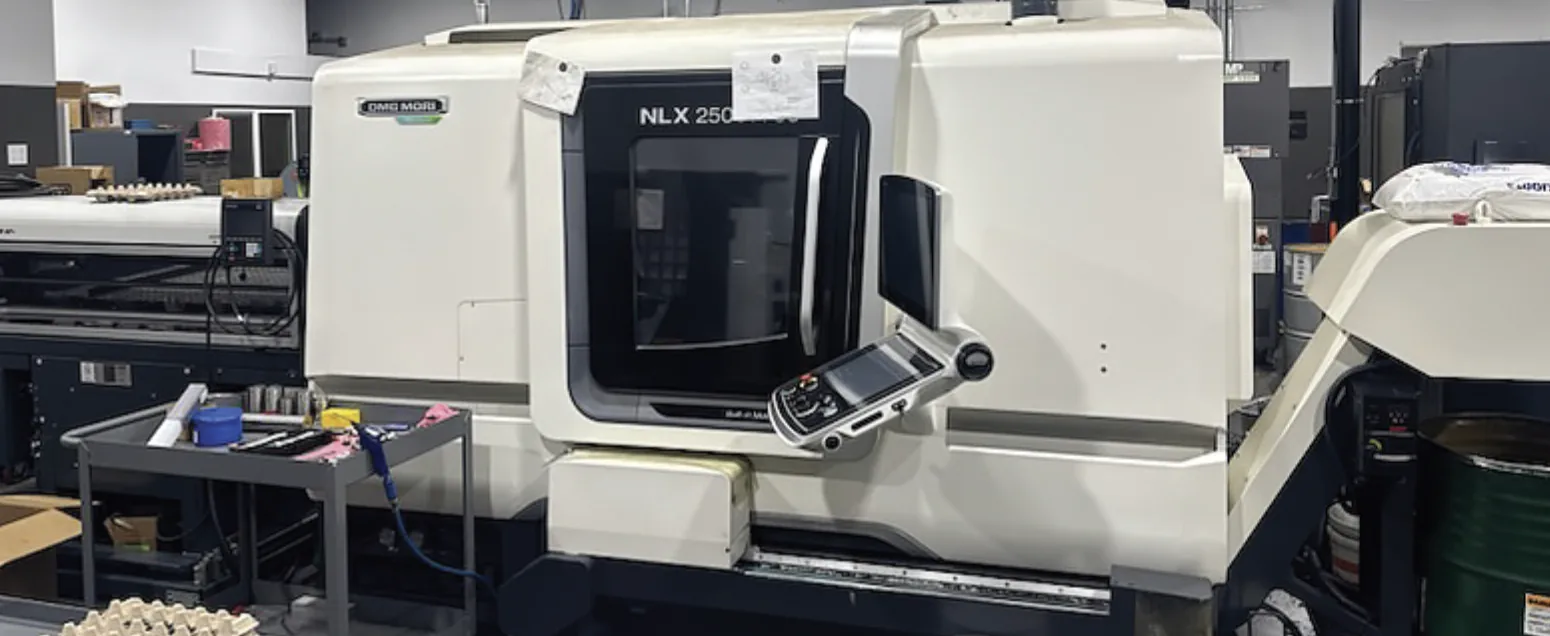


Article and photographs by CNC West Magazine. Originally published as “RJ Enterprises Inc. – From Legacy Widgets to 5-Axis Leadership” on February 18, 2026. Images remain the property of CNC West Magazine and are reproduced here with credit.
What an AS9102 First Article Inspection Report Actually Contains
A form by form walkthrough of the AS9102 first article inspection report: balloon drawings, characteristic accountability, how the report is built from CMM data, why primes reject packages, and when a delta FAI is required.
Design for Manufacturability for Swiss Turned Parts
Practical design guidance for Swiss turned components: guide bushing and bar diameter limits, length to diameter ratios, internal corner radii, thread relief, which tolerances genuinely need tenths, finish callouts and materials that run well.
First Article Inspection Under AS9100D: What a CMM Report Should Actually Prove
A first article report is not paperwork attached to a shipment. It is documented evidence that the process — not the sample — is capable of repeating the print.